
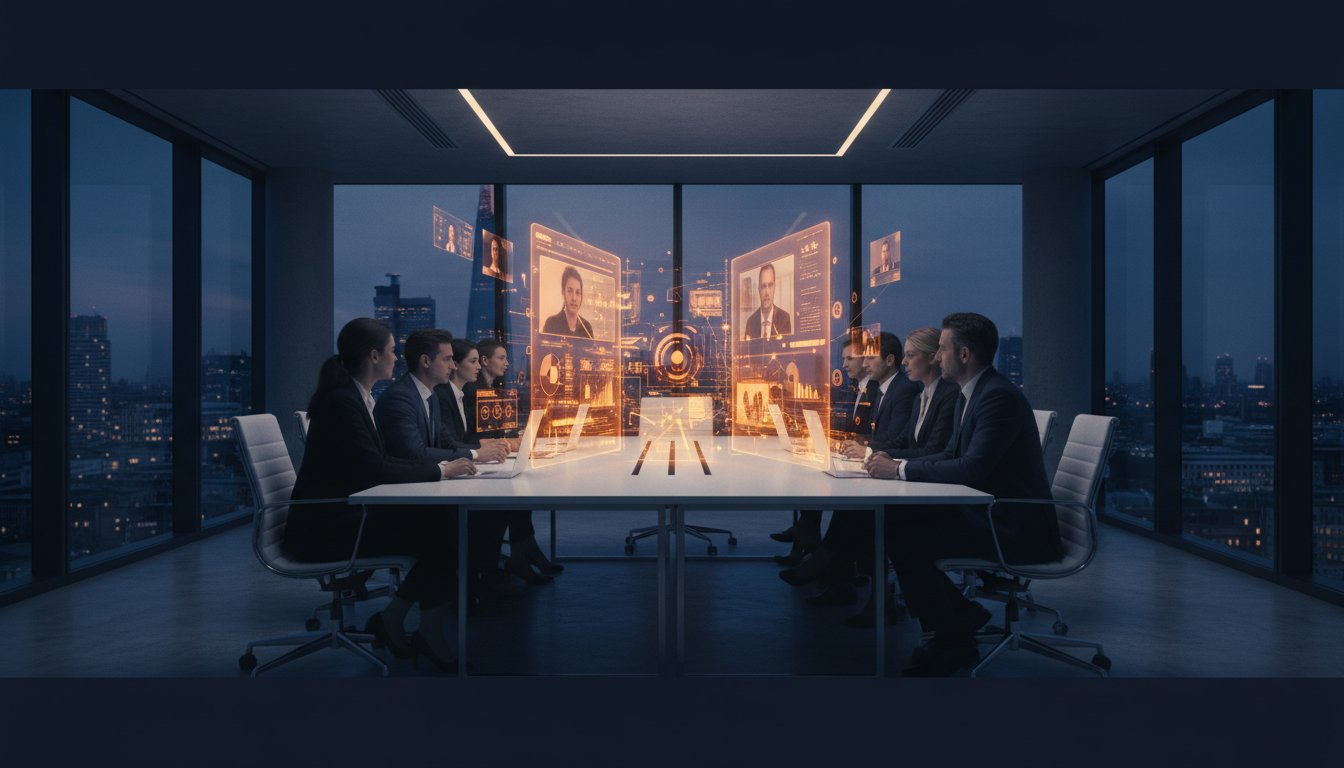
Video Conferencing Strategy: A Strategic Guide for the 2026 Built Environment
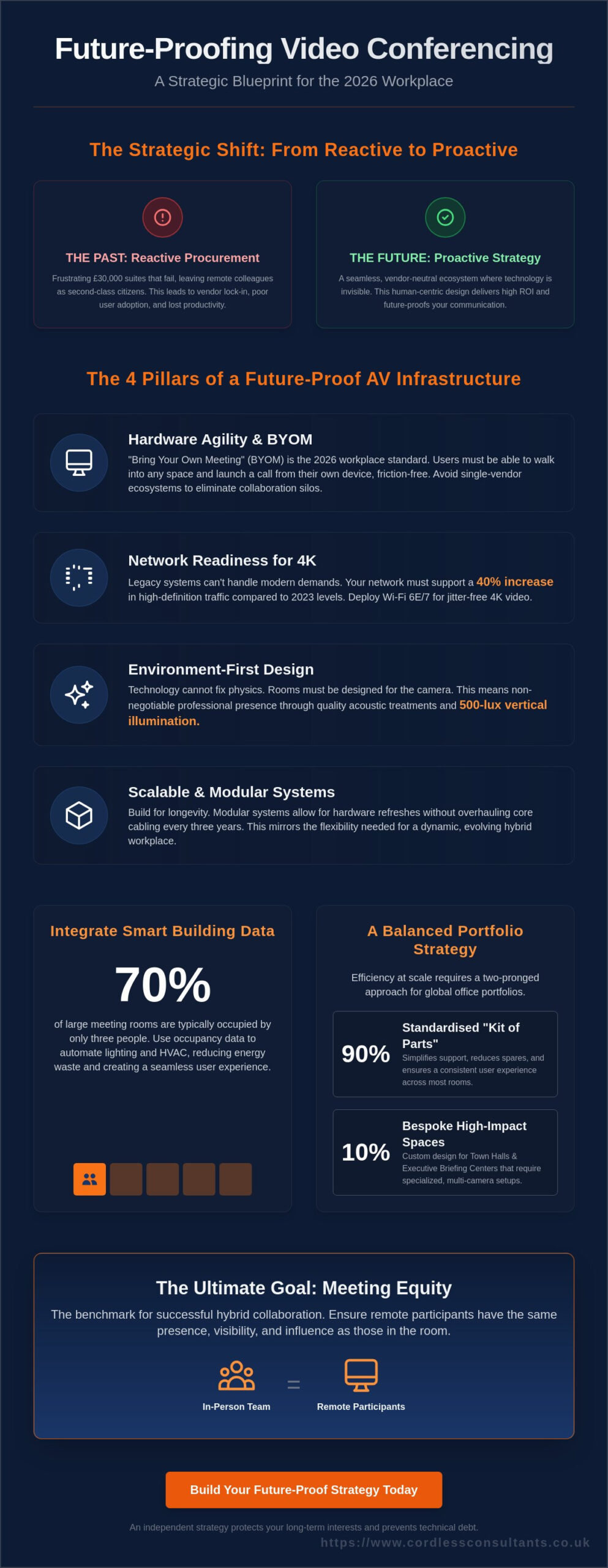
What if your most expensive meeting room technology is actually your greatest barrier to productivity? By 2026, the success of the built environment won’t be measured by the brand of hardware on the wall, but by how invisibly the technology serves the person using it. You’ve likely felt the frustration of a £30,000 suite that refuses to launch a simple call or leaves remote colleagues feeling like second-class citizens. It’s a common pain point. Reactive hardware procurement has left many UK organisations trapped in a cycle of vendor lock-in and poor user adoption. Transitioning to a proactive video conferencing strategy is now the only way to ensure your workplace remains relevant.
Budgeting depends on room complexity; professional-grade huddle spaces typically start at £5,000 per room while large boardrooms can exceed £25,000. These figures, based on 2023 industry benchmarks, include high-fidelity audio and intelligent cameras. Firms should typically allocate 15% of their total fit-out budget to AV and IT infrastructure to future-proof their space. To ensure these projections are accurate within the broader construction phase, Consulting Estimating Consultants provide the specialist quantity surveying and cost consultancy required for such projects. Investing in a comprehensive video conferencing strategy early prevents the costly rip and replace cycles common with budget-driven procurement.
To achieve this level of seamlessness, you can explore Intelligent Video Conferencing Solutions options that focus on intuitive, one-touch join capabilities for diverse office environments.
We know you want technology that works for everyone, every time, regardless of their location. This guide shows you how to pivot from buying boxes to building a seamless, vendor-neutral ecosystem that delivers a high ROI on your property investments. We’ll explore the strategic shift toward human-centric design and technical interoperability required to future-proof your communications for 2026 and beyond.
Defining a Video Conferencing Strategy for the Hybrid Era
A modern video conferencing strategy is no longer a mere checklist of hardware. It’s the deliberate alignment of people, physical space, and digital infrastructure to ensure seamless communication across a distributed workforce. While the history of video conferencing was defined by grainy point-to-point calls, the 2026 landscape demands a holistic ecosystem that removes every barrier to collaboration.
Many organisations still suffer from “good enough” audio-visual setups. This compromise is the primary driver of modern workplace friction. When technical failures or poor audio quality interrupt the flow of ideas, the business loses more than just time; it loses cultural cohesion. We’ve seen a fundamental shift in commercial real estate. Leaders are moving away from reactive IT fixes toward proactive technology design. This transition ensures that digital tools are baked into the floorplan from day one, rather than being bolted on as an afterthought.
This strategic shift introduces the concept of the Workplace Journey. In this model, technology supports every touchpoint of the employee day. It starts with frictionless room booking and extends to intuitive, one-touch join experiences that feel identical regardless of the room size or location.
Meeting Equity: The Core of 2026 UX Design
Meeting equity is the benchmark for successful hybrid collaboration. It’s the practice of ensuring remote participants possess the same presence, visibility, and influence as those physically in the boardroom. In the 2026 built environment, spatial audio and intelligent camera framing have transitioned from luxury add-ons to strategic requirements. These tools eliminate the cognitive load of trying to identify who is speaking in a crowded room.
Achieving this level of parity requires a deep commitment to UX Design. When the user experience is prioritised, technology adoption increases and the “digital divide” between home and office disappears. By focusing on high-fidelity interaction, firms can realise the full potential of their human capital and their physical estate.
The Pillars of a Future-Proof AV Infrastructure
A resilient video conferencing strategy rests on hardware that remains agile across platforms. By 2026, the “Bring Your Own Meeting” (BYOM) model has become the workplace standard. Users expect to walk into any space and launch a call from their own device without friction. Locking your organisation into a single-vendor ecosystem creates silos that stifle collaboration and frustrate visitors who use different platforms.
Network infrastructure must be ready for 4K as standard. High-concurrency video traffic can cripple legacy systems. It’s vital to assess your IT networks and services to ensure they can handle a 40% increase in high-definition traffic compared to 2023 levels. Bandwidth management and robust Wi-Fi 6E or 7 deployment are critical to preventing jitter during executive calls.
Environmental design dictates performance. Even the most advanced AI-tracking camera will struggle in a room with excessive glass or poor lighting. High-quality acoustic treatments and 500-lux vertical illumination are non-negotiable for professional presence. Technology can’t fix physics; a room must be designed for the camera as much as for the people inside it.
Scalability ensures longevity. Modular systems allow for hardware refreshes without the need to overhaul core cabling every three years. This approach mirrors the flexibility required in education-specific video conferencing, where hardware must adapt to varied pedagogical styles and fluctuating user numbers.
Integrating Smart Building Technology
Data should drive your video conferencing strategy. Occupancy sensors and room booking data reveal how spaces are actually used. Our data shows that 70% of large meeting rooms are often occupied by only three people. By linking Smart Buildings technology with your AV, you can automate environment controls. This ensures lighting and HVAC adjust instantly based on real-time occupancy, creating a seamless user experience while reducing energy waste.
Standardisation vs. Customisation
For global office portfolios, a “kit of parts” approach is the most efficient path. Standardising hardware across 90% of your rooms simplifies support and reduces the need for extensive spares. However, high-impact “Town Hall” or “Executive Briefing” spaces require a bespoke touch. These areas demand specialised meeting room technology design to facilitate complex multi-camera setups and high-fidelity audio. If you’re looking to refine your workplace journey, our consultants can help you audit your current estate.
Implementation: Procurement and Life-cycle Management
Vendor-led design is a trap. Manufacturers prioritise their own proprietary ecosystems, which often leads to ‘walled gardens’ that complicate future integrations. An independent video conferencing strategy protects your long-term interests by focusing on interoperability. It prevents the accumulation of technical debt that occurs when hardware is purchased in isolation without considering the broader estate.
Structuring a technology tender requires a shift from buying hardware to buying outcomes. A robust tender specifies performance requirements and integration standards rather than just a list of parts. To ensure this vision survives the construction site, technical project management is essential. These specialists act as the guardian of design intent, managing vendors and ensuring the final delivery matches the strategic brief despite the pressures of a building programme.
Day Two operations define long-term ROI. A strategy for maintenance, remote monitoring, and user adoption must be funded and planned from the start. If the technology is too complex for a three-minute setup, it won’t be used. Success depends on a seamless transition from the project team to the operational team.
Avoiding Technical Debt in Workplace Relocations
Timing is critical. The technology strategy must be finalised before RIBA Stage 2 architectural design is complete. Waiting until the construction phase leads to expensive retrofitting and compromised acoustics. During any move, audit existing hardware thoroughly. Data from 2024 suggests that up to 25% of legacy hardware in UK offices is incompatible with current security protocols. Retire what is obsolete; migrate only what adds value to the new environment.
Measuring Success: Beyond Uptime
Technical KPIs like 99.9% uptime are now baseline expectations. True success is measured through business outcomes. Track room utilisation, user sentiment, and the reduction in carbon-heavy travel. By 2026, smart building sensors will provide the data needed to refine your video conferencing strategy every six months, ensuring the physical estate evolves as quickly as the workforce’s habits.
Future-Proofing Your Workplace Journey
The 2026 built environment demands more than just hardware; it requires a deep alignment between human-centric design and technical rigour. Success relies on moving beyond reactive procurement toward a lifecycle-managed infrastructure that supports seamless collaboration. A resilient video conferencing strategy isn’t a luxury but a fundamental pillar of modern commercial real estate. By prioritising vendor-neutrality and high-level strategic planning, organisations can realise long-term ROI while avoiding the common pitfalls of proprietary lock-in.
Cordless Consultants brings 30 years of independent technology consultancy to every project. Our expertise in high-profile commercial environments ensures your AV infrastructure is both innovative and industrially sound. We don’t just specify equipment; we navigate the complex intersection of IT and the physical workspace to deliver measurable business value. It’s time to untether your organisation from outdated systems and embrace a strategy built for the next decade of work.
Optimise your workplace communication with an independent AV strategy from Cordless Consultants.
Let’s build a smarter, more connected future together.
Frequently Asked Questions
What is the most common mistake in a video conferencing strategy?
The most common error is selecting hardware before defining the user journey or assessing network readiness. Research from 2023 indicates that 42% of technology deployments fail to meet ROI targets because they don’t align with actual meeting room behaviours. Organisations often buy expensive all-in-one bars that don’t suit their specific room acoustics. A successful video conferencing strategy must begin with a workplace audit to ensure the technology supports the people.
How do we choose between Zoom Rooms, Microsoft Teams Rooms, and Google Meet?
Choice should follow your existing enterprise ecosystem to ensure a seamless user experience. Microsoft Teams Rooms (MTR) is the standard for 80% of UK FTSE 100 firms due to its deep integration with Office 365. Zoom Rooms offer superior ease of use for external guest joining; Google Meet suits organisations already committed to Google Workspace. We recommend a platform-first approach that minimises friction for your employees during their daily workplace journey.
Does our office need a dedicated video conferencing network?
High-quality video requires a dedicated VLAN to prioritise real-time traffic and prevent packet loss during peak usage. In a 2024 survey of IT managers, 65% reported that jitter and dropped calls were directly linked to bandwidth competition with standard office data. Implementing Quality of Service (QoS) protocols ensures that a 4K video stream doesn’t stutter when someone sends a large file. This technical precision is vital for maintaining professional standards.
How much should we budget for a professional video conferencing strategy?
Budgeting depends on room complexity; professional-grade huddle spaces typically start at £5,000 per room while large boardrooms can exceed £25,000. These figures, based on 2023 industry benchmarks, include high-fidelity audio and intelligent cameras. Firms should typically allocate 15% of their total fit-out budget to AV and IT infrastructure to future-proof their space. Investing in a comprehensive video conferencing strategy early prevents the costly rip and replace cycles common with budget-driven procurement.