

How to Write a Technology Tender for an Office Build: A Strategic Guide
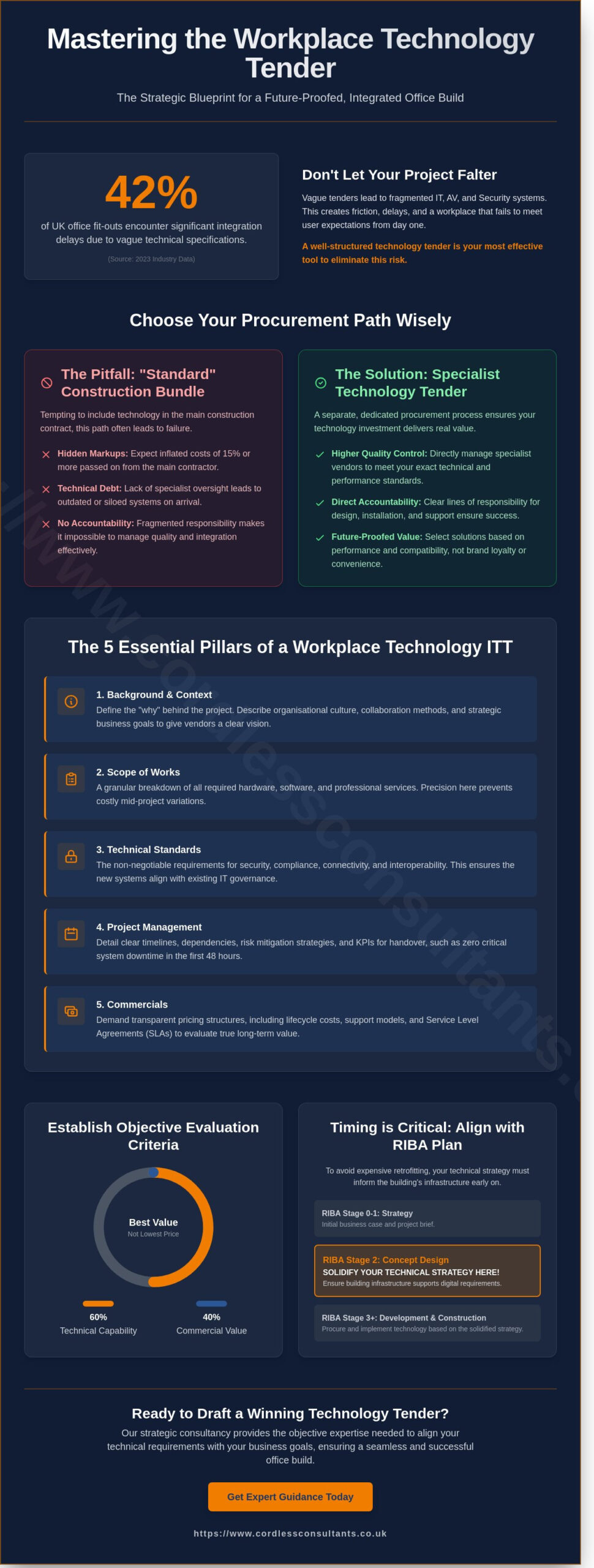
Your technology tender isn’t just a procurement document; it’s the strategic blueprint for your organisation’s future productivity. Industry data from 2023 suggests that 42% of UK office fit-outs encounter significant integration delays because of vague technical specifications. You likely recognise the frustration of managing fragmented IT, AV, and Security workstreams when vendor bids arrive without objective criteria for a fair comparison. Learning how to write a technology tender for office build projects is the most effective way to eliminate this friction and ensure your new workplace remains integrated from the moment you move in.
We believe that technology should serve the people using it, not the other way around. This guide will help you master the art of drafting a technical ITT that attracts high-quality partners and aligns with your overarching business goals. You’ll gain a clear roadmap for the tendering process and a document structure designed to deliver a future-proofed workplace strategy that stands the test of time. We will explore how to move from a list of hardware requirements to a cohesive vision that enhances the daily user journey.
Defining the Strategic Scope of Your Technology Tender
A technology tender is a formal Invitation to Tender (ITT) specifically crafted to procure the IT, AV, and Security systems for your new workspace. Understanding how to write a technology tender for office build projects starts with a fundamental shift in perspective. You aren’t merely purchasing a list of equipment; you’re implementing a Workplace Technology Strategy. This strategic approach ensures that every technical decision supports the long-term operational goals of the business.
To achieve the best results, your tender must remain vendor-neutral. This objectivity allows you to select solutions based on performance and compatibility rather than brand loyalty. Timing is equally critical. To avoid expensive retrofitting, align your procurement with the RIBA Plan of Work. Your technical strategy should be solidified by RIBA Stage 2 (Concept Design) to ensure the building’s physical infrastructure supports your digital requirements.
Identifying User-Centric Requirements
Successful technology integration depends on how employees interact with the space. Conduct stakeholder interviews across departments to uncover specific needs. According to 2023 industry data from Leesman, technology is a primary driver of workplace satisfaction, yet many offices fail to meet basic user expectations. Translate business objectives, such as hybrid working or sustainability targets, into functional requirements. If your goal is a frictionless visitor experience, your tender should specify integrated access control and wayfinding systems rather than just hardware specs.
The Danger of the “Standard” Construction Bundle
It’s tempting to include technology within the main construction contract, but this often leads to complications. Bundling IT and AV with general building works can result in hidden markups of 15% or more. More importantly, it creates technical debt. Main contractors often lack the specialist expertise required to oversee complex digital integrations, leading to systems that are siloed or outdated upon arrival. Managing a separate, specialist procurement process for your technology ensures higher quality control and direct accountability. This is a vital step when learning how to write a technology tender for office build that delivers genuine value.
The Essential Structure of a Workplace Technology ITT
A high-performing Invitation to Tender (ITT) must be more than a shopping list. It is a strategic blueprint. To ensure clarity and competitive tension, every tender should include these core sections:
- Background and Context: Define the organisational culture and the strategic “why” behind the project.
- Scope of Works: A granular breakdown of hardware, software, and professional services.
- Technical Standards: The non-negotiable security, compliance, and connectivity protocols.
- Project Management: Timelines, dependencies, and rigorous risk mitigation strategies.
- Commercials: Transparent pricing structures, including lifecycle costs and SLAs.
The “Background and Context” section is where you translate business vision into technical requirements. Don’t just list headcount. Explain how your teams collaborate. Data from the 2023 Leesman Index shows that 85% of employees value a high-quality office environment; your tender should reflect this by prioritising user-centric design. The “Scope of Works” acts as the heart of the document. When learning how to write a technology tender for office build programmes, precision here prevents costly mid-project variations and ensures vendors are held to account for every cable and codec.
Categorising IT, AV, and Security Workstreams
Modern smart buildings are converged ecosystems. You should structure the tender into specific lots, such as Network Infrastructure, Audio Visual, and Physical Security. This allows specialist vendors to bid for their core competencies while requiring them to demonstrate how they will integrate. A 2024 JLL report suggests that 60% of organisations now prioritise integrated building technology to drive energy efficiency. Your tender must demand interoperability between these workstreams to avoid technical silos.
Defining the Implementation and Handover Process
Success isn’t measured by the install; it is measured by adoption. Vendors must provide comprehensive “As-Built” documentation and structured staff training sessions. We recommend setting clear KPIs for the migration phase, such as zero critical system downtime during the first 48 hours of occupancy. This ensures a seamless transition on day one. For expert guidance on aligning these technical requirements with your business goals, you can explore our strategic consultancy services for an objective perspective.
Establishing Objective Evaluation and Selection Criteria
Selecting a partner based solely on the bottom line is a recipe for technical debt. To understand how to write a technology tender for office build that delivers long-term ROI, you must adopt a “best value” model. We recommend a weighted scoring system; typically 60% technical capability and 40% commercial value. This ensures the chosen solution meets the high-performance demands of a modern workplace while remaining fiscally responsible.
Technology doesn’t exist in a vacuum. Your vendor must collaborate seamlessly with MEP and fit-out contractors on a busy site. Verify this through references from projects completed within the last 18 months, ensuring they can coordinate with professional building firms like Swiss Build Ltd who understand the importance of strict adherence to building regulations and safety standards. A vendor’s cultural fit is often as critical as their technical prowess; they’re an extension of your project team.
- Technical Weighting: Prioritise system integration, scalability, and user experience.
- Commercial Weighting: Look beyond the initial capital expenditure to the total cost of ownership.
- Validation: Demand three case studies of similar scale and complexity to your current project.
Avoiding the Pitfalls of Vendor-Led Procurement
Allowing a hardware-aligned vendor to draft your specifications creates an inherent conflict of interest. They’ll naturally favour proprietary systems that lock you into their ecosystem. Watch for “hidden” costs like mandatory annual licensing or specialised maintenance fees. These can inflate the total cost of ownership by 25% over five years. Independent oversight ensures your requirements remain focused on business outcomes, not a specific manufacturer’s sales targets.
The Interview and Presentation Stage
The pitch shouldn’t be a polished sales deck; it’s a stress test. Challenge them with a specific site constraint, such as a restricted ceiling void or a complex heritage building requirement. Ask about their risk mitigation for global supply chain delays, which affected 80% of UK construction projects in 2023. You need to see their problem-solving skills in action, not just their marketing materials. Focus on their project management methodology to ensure they can handle the inevitable shifts in a construction timeline.
Ready to secure an independent partner for your next project? Explore our workplace technology consultancy services for expert guidance.
Navigating Procurement Risks in Commercial Office Builds
The most common hurdle for project leaders is the belief that they lack the internal technical expertise to judge complex bids. You don’t need to be an infrastructure specialist to manage this process; you need an independent partner to provide an unbiased technical audit. Without this objectivity, organisations often fall into the trap of selecting vendors based on polished sales presentations rather than technical viability or long-term compatibility.
A significant risk involves the “delivery gap” between an architect’s aesthetic vision and the actual technical execution. While a lead designer focuses on the physical experience, the underlying technology must be capable of supporting that intent. We bridge this divide by translating high-level design concepts into granular technical specifications. This ensures that the smart building features promised in the initial renders actually function on day one.
Finalising the contract requires moving from the selection phase into rigorous project management. This transition is where the how to write a technology tender for office build process pays dividends. It transforms a list of requirements into a definitive baseline for performance, hardware standards, and integration milestones.
De-risking the Implementation Phase
A precision-engineered tender acts as a legal safeguard. It prevents the scope creep that frequently inflates project costs by 15% or more. By defining exact deliverables, you hold vendors accountable to their original pricing and timelines. Appointing a client-side representative to oversee performance ensures that technical standards don’t slip during the high-pressure construction phase. They act as your expert eyes on-site, verifying that every cable and sensor meets the agreed specification.
Next Steps for Your Workplace Journey
Success depends on early engagement. Delaying technology decisions until the construction phase leads to compromised designs and rushed procurement. To build a truly resilient foundation, your journey should begin with a clear vision of how IT integrates with your human-centric goals. We recommend exploring our insights on Strategic IT Strategy & Design for Modern Workplaces to ensure your next office build is future-proof and aligned with your corporate objectives.
Mastering Your Workplace Technology Strategy
Success in modern procurement demands a shift from simple hardware acquisition to strategic workplace design. You’ve now explored the essential steps of how to write a technology tender for office build projects, from defining a robust ITT structure to establishing objective selection criteria that mitigate long-term risk. It’s about ensuring your infrastructure supports the human experience while remaining flexible enough to adapt to future shifts in work patterns.
Since 1994, Cordless Consultants Limited has provided independent, vendor-neutral advice to help organisations navigate these complexities with calm confidence. Our specialists in IT, AV, Security, and Smart Building design bring the technical authority needed to manage high-stakes relocations and technical audits. We’ve spent three decades bridging the gap between corporate strategy and technical execution, ensuring every system is integrated to optimise the user journey.
Ready to secure your project’s success? Book a consultation for your technology procurement and tendering strategy today. Let’s create a workplace that truly performs for your people.
Frequently Asked Questions
What is the difference between an RFP and an ITT for technology?
An RFP focuses on seeking creative solutions for a defined problem, while an ITT is a formal document used when the technical specifications are already finalised. In a typical £5 million office fit-out, an RFP allows vendors to suggest how to achieve a smart building goal. An ITT requires them to price a specific, pre-determined list of hardware and software components.
When should I start writing the technology tender for a new office build?
You should begin drafting your technology tender at least 12 to 18 months before your scheduled move-in date. This timeline typically aligns with the RIBA Stage 2 or 3 design phases. Early engagement ensures that infrastructure requirements, such as cabling paths and power loads, are integrated into the base build before construction costs escalate by up to 25% due to late-stage changes.
How do I ensure my technology tender is future-proof?
To ensure your technology tender is future-proof, specify open standards and interoperable APIs rather than proprietary, closed-loop systems. Focus on high-bandwidth infrastructure like Cat6A cabling or OM4 fibre that supports 10Gbps speeds. This approach allows your organisation to integrate emerging AI-driven workplace tools or IoT sensors without replacing the core physical layer within the first 5 years of occupancy.
Should I use a template for my IT and AV tender?
You can use a template for the administrative framework, but the technical requirements must be bespoke to your specific workplace strategy. Generic templates often overlook unique site constraints or specific user-centric design goals. When learning how to write a technology tender for office build projects, it’s better to use a framework that prioritises your business outcomes rather than just copying a standard kit list.
How many vendors should I invite to bid on a technology tender?
Invite between 3 and 5 qualified vendors to bid on your technology tender to maintain a competitive yet manageable process. Data from UK procurement cycles shows that inviting more than 6 bidders often leads to tender fatigue and lower-quality responses. A shortlist of 4 allows for a deep-dive evaluation of technical competence and cultural fit while ensuring you get the best value for your investment.